
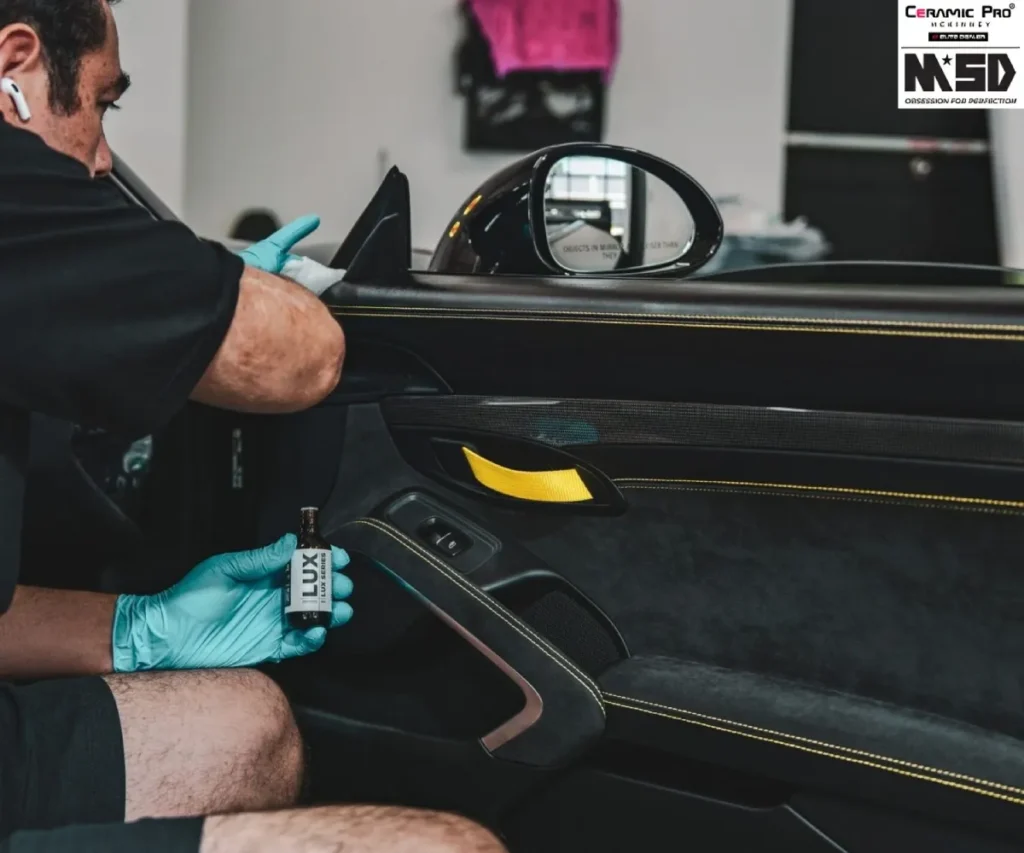
Achieving a uniform, durable, and fully bonded coat of Ceramic Pro LUX requires controlled environmental conditions, meticulous paint preparation, and advanced application techniques that cannot be replicated in a standard home garage. Professional installation guarantees that every panel receives exact film-thickness metering, seamless flashing management, and comprehensive cross-link curing for maximum paint preservation. Without certified expertise, improper bonding leads to high spots, premature degradation, and compromised hydrophobic performance.
Understanding the Chemistry Behind Surface Protection
Surface protection technology relies on heavy-duty, ultra-hydrophobic coating systems whose molecular structure utilizes nano-ceramic polymers to chemically interlock with clear coat pores. When applied correctly, this structure creates an impenetrable barrier against environmental contaminants, UV oxidation, acidic rain, and chemical staining.
Vehicle owners seeking Prosper ceramic pro LUX installations rely on professional expertise because the formula is highly sensitive during application. Active solvent carriers evaporate rapidly upon surface contact, triggering a timed process known as “flashing.” Managing this window requires precise control over ambient humidity, panel temperature, and air movement.
Without complete environmental control and precise timing, nanostructures fail to align evenly across clear coat surfaces. This failure compromises both optical clarity and physical durability, leaving weak points across your vehicle’s exterior.
The Nonnegotiable Standard: Preparation and Surface Correction
A ceramic coating is only as effective as the surface beneath it. Liquid ceramic coatings act as magnifiers; applying protective coatings over swirl marks, oxidation, embedded iron particles, or minor clear coat defects permanently locks those flaws beneath a crystalline layer.
Professional technicians follow rigorous preparation protocols to establish a pristine foundation:
- Decontamination & Wash: Mechanical and chemical decontamination eliminates embedded brake dust, tar, and organic fallout that standard washing leaves behind.
- Paint Correction: Multi-stage machine polishing flattens light scratches and micro-marring. This ensures optimal light reflection and creates a flat bonding bed for the coating.
- Isopropanol Cleansing: A dedicated solvent panel wipe strips remaining polishing oils, waxes, and silicones. Clean paint is mandatory for true chemical cross-linking.
Skipping any phase in this sequence leads directly to premature coating rejection, uneven coverage, or persistent haze beneath the protective shell.
Our Proprietary Standard: Precision-Focused Protection
MSD Auto Finish is a precision-focused automotive protection and customization studio built on one nonnegotiable belief: standards never change. From preparation to final inspection, our obsession with protection drives everything we do. By maintaining strict cleanroom standards, precise temperature control, and full transparency, our certified team delivers uncompromised quality, exceptional results, and complete peace of mind.
Why DIY and Uncertified Applications Fail
Attempting to apply advanced coatings without specialized training or professional-grade equipment presents significant risks to a vehicle’s finish. Unlike basic off-the-shelf consumer sealants, professional-grade ceramic formulas bond semi-permanently with clear coats within minutes.
When attempting to apply ceramic pro LUX in Prosper, uncertified installations frequently result in visible installation defects.
Common Risks of Amateurs or DIY Installs
| Application Flaw | Root Cause | Resulting Impact | Remediation Required |
| High Spots | Delayed or uneven wipe-off during flashing | Rainbow-like, dark patches on the paint | Abrasive machine polishing & wet sanding |
| Low Hydrophobicity | Inadequate paint prep or oil contamination | Rapid water sheeting failure & dirt attraction | Complete stripping & reapplying coating |
| Curing Micro-Bubbles | High humidity or heat during leveling | Hazy finish & reduced impact resistance | Panel repainting or heavy compound leveling |
| Early Delamination | Inconsistent coat thickness per panel | Patchy protection and premature wear | Full chemical decontamination and recoating |
When high spots cure fully, simple buffing will not remove them. Fixing these errors requires aggressive machine compounding or wet sanding, which strips away valuable OEM clear coat thickness.
Achieving Uniformity: Thickness Metering and Leveling Techniques
Consistent coverage requires absolute uniformity across complex body contours, sharp character lines, and varied substrate materials like carbon fiber, aluminum, and plastic trim.
During a recent audit for a firm in Prosper, TX, our team demonstrated how micro-variations in panel temperature dramatically alter ceramic flash times. Exterior panels facing windows or shop lighting heat up faster, requiring real-time adjustments to leveling pressure and microfiber wipe sequences.
Professional applicators employ structured cross-hatch wipe patterns (vertical strokes immediately followed by horizontal passes) using specific block applicators. This technique forces liquid ceramic deep into clear coat pores, maintaining an even wet-film thickness.
Cross-Hatch Pass:
[│] Vertical Pass ──► Coverage Into Pores
[─] Horizontal Pass ──► Uniform Wet Film Thickness
Specialized lighting setups utilizing both high-lumen inspection lamps and diffuse color-match lights allow technicians to catch micro-haze and uneven flash zones in real time, preventing defects before the formula cures.
Thermal Curing and Long-Term Durability
The application process does not end when the final microfiber towel wipes off excess residue. Chemical cross-linking continues over hours and days. Professional studios use infrared (IR) curing lamp systems to accelerate solvent evaporation and strengthen molecular bonds.
[Micro-Leveling Finish] ➔ [Infrared Lamp Curing] ➔ [Full Molecular Density]
IR thermal curing bakes the ceramic matrix from the bottom layer upward, preventing solvent entrapment beneath a premature surface crust. This step maximizes pencil hardness ratings, chemical resistance against road salt or bug splatter, and long-term gloss retention. Without controlled thermal curing, a vehicle exposed to outdoor moisture or humidity within its first 24 to 48 hours risks coating degradation and water-spot etching inside the uncured matrix.
Preserving Long-Term Vehicle Value in North Texas
Intense sun, high UV levels, pollen, and road debris constantly threaten clear coats. Certified ceramic coatings protect daily drivers and exotic performance vehicles from oxidation, fading, and surface damage. Investing in accredited applications preserves gloss, maintains resale value, and ensures valid warranty coverage.
The Advantage of Elite Certification and Studio Experience
Choosing a certified Ceramic Pro Elite Dealer guarantees access to professional-grade formulas, proprietary equipment, and factory-trained technicians. MSD Auto Finish combines elite certification with a commitment to complete client transparency.
From paint protection film (PPF) and vinyl wrapping to full detailing, our studio handles every vehicle with extreme care and precision. We treat your vehicle as a valuable investment, using clean facilities, disciplined workflows, and proven methods to deliver superior, long-lasting results.
People Also Ask
What makes professional ceramic coatings different from standard consumer coatings?
Professional-grade nano-ceramic coatings are engineered for maximum hydrophobic performance, scratch resistance, and chemical defense. Unlike consumer-grade coatings, their high concentration of active ceramic solids requires precise surface preparation, controlled flash-time management, and professional thermal curing to achieve proper bonding.
How long does a professional ceramic application take?
A proper professional application typically takes two to four days. This timeline accounts for thorough decontamination, clay bar treatment, multi-stage paint correction, precise multi-layer coating application, and proper curing time under controlled studio conditions.
What are the risks of DIY ceramic coating in an uncontrolled garage?
Applying high-tier ceramic coatings in an uncontrolled home environment carries high risk. Without cleanroom-level air filtration, strict humidity control, panel-temperature monitoring, and infrared curing equipment, you run a high risk of trapping dust, creating persistent high spots, or suffering from improper paint bonding.
What should I do if a ceramic coating develops high spots?
If high spots are caught within minutes of application, they can often be leveled using fresh ceramic solution or a micro-leveling towel. However, once the coating cures, high spots must be removed through precise machine polishing or light wet sanding, followed by full reapplication to the affected panel.
How do I maintain my ceramic coating after application?
Maintain your coating by performing regular two-bucket hand washes with pH-neutral shampoos. Avoid automated car washes with harsh brushes or high-pH detergents. Routine maintenance washes and professional inspection services keep the hydrophobic surface free of mineral contamination and working at peak performance.
Protect Your Investment with MSD Auto Finish
Your vehicle deserves uncompromised craftsmanship and proven protection methods. At MSD Auto Finish, our team combines passion, precision, and elite-level certification to keep your vehicle looking its absolute best.
Experience true peace of mind and long-lasting paint preservation. Schedule your high-end service for ceramic pro LUX in Prosper, TX, and discover how our obsession for perfection elevates your driving experience.
Contact us today to schedule your consultation!