
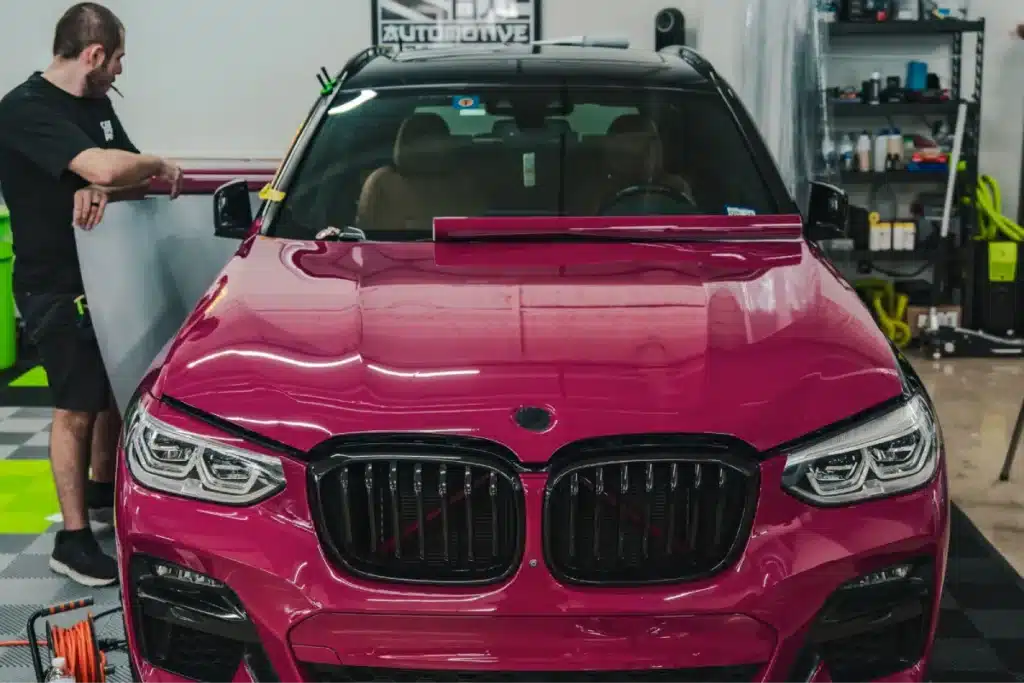
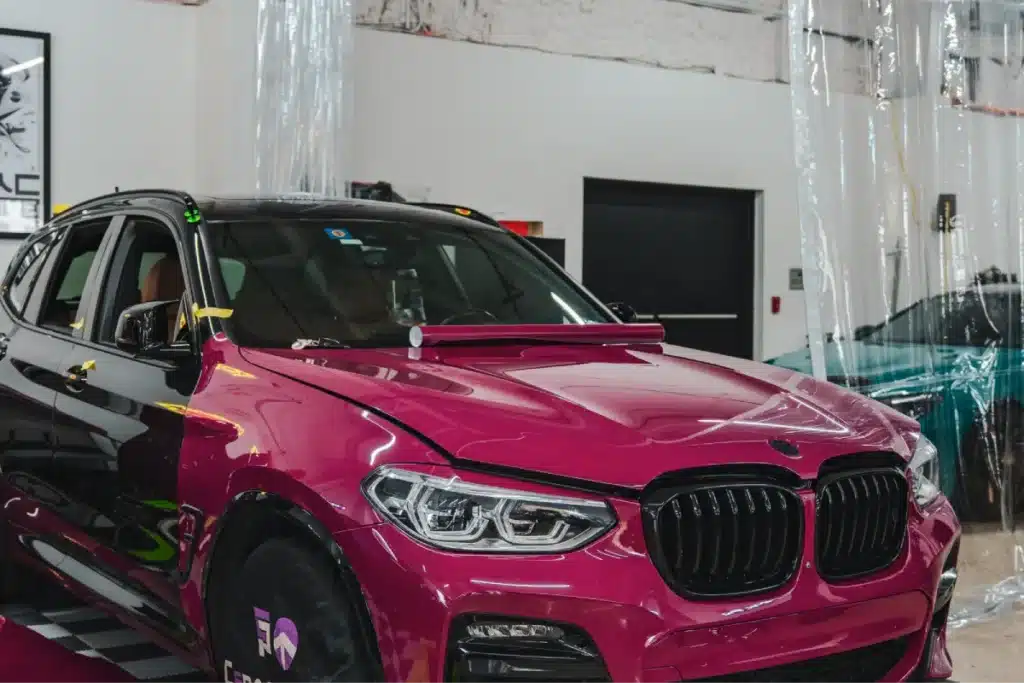
Partial vinyl wrapping is generally more affordable than a full vehicle wrap because it covers fewer panels, requires less material, and often takes less time to install. It lets vehicle owners customize specific areas without paying for a full color transformation. However, the final cost depends on panel complexity, vinyl quality, design requirements, and installation labor.
Choosing between partial and full wrapping comes down to how much of your vehicle you want to transform and whether the additional coverage justifies the expense.
What Is The Difference Between Partial And Full Vinyl Wrapping
A vinyl wrap is a thin, adhesive-backed film applied to exterior vehicle surfaces to change their color, finish, or appearance without permanent repainting.
Partial wrapping covers selected areas, while full wrapping covers most visible painted exterior panels.
For drivers researching vinyl wraps in Allen, TX, understanding this difference helps determine which installation best fits their customization goals.
Partial vinyl wrap: A customized installation covering selected panels or sections, such as the hood, roof, mirrors, or portions of the doors.
Full vehicle wrap: A more extensive installation intended to change the appearance of nearly all visible painted exterior surfaces.
Accent wrap: A smaller application designed to introduce contrasting colors or finishes to specific components.
Color-change wrap: A vinyl application that modifies the visible color of selected panels or the entire vehicle.
Both partial and full wraps can use professional automotive vinyl available in gloss, satin, matte, metallic, and other specialty finishes.
The main difference is the coverage area and the work required to achieve a consistent finish.
At MSD Auto Finish, vinyl wrapping emphasizes careful preparation, precise panel alignment, clean edges, and cohesive customization.
These installation details matter whether the project involves one accent panel or an entire vehicle.
Why Partial Vinyl Wraps Usually Cost Less
The cost advantage of partial wrapping comes primarily from reduced material consumption and installation time.
A full vehicle wrap requires substantial film to cover doors, bumpers, fenders, the hood, the roof, and other visible surfaces.
Partial wrapping limits coverage to selected areas, reducing the quantity of film required.
For vehicle owners comparing vinyl wraps in Allen, a carefully planned partial wrap may provide the desired visual improvement without the expense of changing every exterior panel.
Several factors influence the difference.
1. Less Vinyl Material Is Required
Automotive wrapping film is generally supplied in rolls with fixed widths.
A full wrap requires installers to cut, position, and fit material across numerous panels, with extra allowances for curves, edges, and trimming.
Partial wrapping often uses fewer sections.
However, material savings depend on how efficiently sections can be cut from the roll. Irregular shapes and specialty films may produce additional waste.
2. Fewer Panels Need Preparation
Before wrapping, the installer must remove contamination that could interfere with adhesion.
Every additional panel requires cleaning, inspection, and surface preparation.
Covering fewer panels can reduce the total preparation time.
3. Installation Takes Less Time
A complete vehicle wrap involves numerous transitions, curves, and complex components.
Even experienced installers need sufficient time to position the film correctly and finish exposed edges.
Partial wrapping often requires fewer working hours, although intricate accent designs can still involve considerable labor.
4. Fewer Complex Surfaces May Be Involved
Bumpers, mirrors, recessed handles, and sharply curved panels can require careful stretching, positioning, and finishing.
Selecting flatter panels for partial wrapping may simplify the project.
The number of covered panels alone does not determine difficulty. Shape and accessibility also matter.
Partial Vinyl Wrap vs. Full Vehicle Wrap Comparison
The table below highlights the practical differences between these two customization options.
| Feature | Partial Vinyl Wrap | Full Vehicle Wrap |
| Coverage | Selected panels or sections | Most visible exterior painted panels |
| Material required | Generally less | Generally more |
| Installation labor | Usually lower | Usually higher |
| Customization | Targeted accents and contrast | Comprehensive color transformation |
| Original paint visibility | Remains visible on uncovered areas | Mostly concealed |
| Design complexity | Depends on selected panels | Requires consistent finishing across the vehicle |
| Maintenance | Care for wrapped and exposed areas | Care for larger wrapped surfaces |
| Overall cost | Typically lower | Typically higher |
This comparison assumes similar film quality and installation standards.
For customers researching Allen TX vinyl wraps, the best value depends on the intended look rather than the lowest starting price.
A full wrap may be appropriate when the goal is a uniform color change. A partial wrap is often more practical when the original vehicle color will remain part of the design.
Which Vehicle Parts Can Be Partially Wrapped
Partial vinyl wrapping provides several ways to personalize a vehicle without covering the entire exterior.
The best areas depend on the body design, surface condition, and desired visual effect.
Hood Wrapping
A contrasting hood can give a vehicle a sportier appearance.
Matte, satin, and gloss finishes create different effects depending on the original paint color.
The hood is also relatively accessible compared with complex bumpers, although contours and air vents can affect installation time.
Roof Wrapping
Roof wraps are commonly used to create a contrasting appearance.
A gloss black roof, for example, can create a panoramic-style visual effect on certain vehicles without permanently modifying the original paint.
However, roof installations involve horizontal surfaces exposed to intense sunlight, making appropriate material selection and maintenance important.
Mirror And Accent Wrapping
Side mirrors and smaller trim areas can be customized with contrasting finishes.
Although these components require less material, their curved shapes may require detailed installation work.
Door And Fender Wrapping
Selected doors or fenders can be wrapped to introduce a two-tone appearance or a specific design.
For example, a vehicle owner in Twin Creeks considering a contrasting color scheme might choose selected panels rather than changing the vehicle’s entire exterior.
The installer should evaluate how the new finish transitions into adjacent painted areas.
A well-designed partial wrap should complement the vehicle’s original styling rather than appear unfinished.
What Determines The Final Cost Of A Partial Vinyl Wrap
Partial wrapping is usually more affordable, but two projects with similar coverage can require different labor.
For homeowners and automotive enthusiasts considering vinyl wraps, understanding the estimate is more useful than relying on a generic price per panel.
The main pricing factors include:
- Vehicle size: Larger panels generally require more film.
- Panel complexity: Curved surfaces, recessed areas, and tight edges demand additional installation work.
- Vinyl selection: Specialty textures and finishes may have different material costs.
- Paint condition: Damaged, peeling, or poorly repaired surfaces can affect adhesion and suitability.
- Design requirements: Custom graphics, multiple colors, and intricate layouts may require additional preparation.
- Disassembly requirements: Certain projects may involve removing compatible trim components to achieve the intended finish.
- Existing wrap removal: Removing old vinyl can add time, especially when adhesives have aged or deteriorated.
A written estimate should identify the proposed coverage, selected material, preparation requirements, and any additional work.
This allows customers to compare proposals accurately.
When Is A Full Vehicle Wrap Worth The Additional Cost
A full vehicle wrap may be worth the additional expense when the owner wants a substantially different appearance.
Unlike a partial wrap, which incorporates the original paint color into the design, full wrapping offers a more consistent exterior transformation.
Consider full wrapping when:
- You want to change the vehicle’s overall color.
- The original paint color does not complement your preferred design.
- You prefer a uniform matte, satin, or gloss finish.
- You want customization across nearly all visible exterior panels.
- You are comfortable with the additional installation and maintenance requirements.
For example, a driver in Watters Crossing with a black sedan may prefer a complete satin finish rather than isolated accent panels.
A partial design might not deliver the same visual result.
Full wrapping can also involve decisions about door jambs and other less visible painted surfaces. These areas are not necessarily included in a standard exterior wrap.
Customers should clarify coverage boundaries before booking.
Common Myth: Partial Vinyl Wraps Always Look Incomplete
A common misconception is that a partial vinyl wrap automatically looks less professional than a full wrap.
In reality, the result depends on design planning, color selection, placement, and installation quality.
A carefully selected hood or roof accent can complement the existing paint and create an intentional appearance.
Poorly positioned edges or incompatible finishes, however, can make the customization look disconnected.
Another misconception is that vinyl wrapping provides the same physical protection as paint protection film.
These products serve different purposes.
Vinyl wrap: Primarily changes appearance while offering limited resistance to light surface wear.
Paint protection film: Uses thicker protective material designed to absorb certain impacts and reduce damage from road debris.
Vinyl should not be described as an equivalent substitute for dedicated impact protection.
Most color-change vinyl wraps are primarily for customization.
Does Partial Wrapping Last As Long As A Full Wrap
Partial and full wraps can last as long as each other when they use the same film and are installed and maintained under similar conditions.
Coverage alone does not determine durability.
Film construction, sunlight exposure, surface orientation, vehicle storage, cleaning practices, and installation quality all influence service life.
Horizontal surfaces such as roofs and hoods often experience greater ultraviolet and environmental exposure than some vertical panels.
For a vehicle owner in Montgomery Farm who regularly parks outdoors, maintenance and film selection may be more important than the percentage of the vehicle covered.
Professional automotive wraps can last several years, but manufacturers often provide different durability expectations for horizontal and vertical applications.
Ask the installer about the exact product’s expected service life and warranty limitations.
How To Maintain A Partial Vehicle Wrap
Keeping a wrapped vehicle in good condition requires appropriate cleaning and handling.
Even a small accent wrap can deteriorate prematurely if exposed to aggressive chemicals, abrasive tools, or excessive heat.
Recommended maintenance practices include:
- Wash with wrap-compatible automotive cleaning products.
- Remove bird droppings, insect residue, and other contaminants promptly.
- Avoid abrasive brushes and polishing compounds on wrapped surfaces.
- Follow manufacturer guidance when using pressure washers.
- Use clean microfiber towels to dry gently.
- Avoid prolonged unnecessary sun exposure when practical.
- Inspect exposed edges for early lifting or damage.
Wrapped and unwrapped panels may require different care methods.
Customize Your Vehicle With MSD Auto Finish
Partial vinyl wrapping offers an affordable way to customize your vehicle without covering every exterior panel. The best option depends on your design, coverage, material quality, and installation.
For drivers considering vinyl wraps in Allen, MSD Auto Finish in nearby McKinney provides vehicle customization focused on precise alignment, clean edges, and quality workmanship.
Ready to transform your vehicle’s appearance? Contact us to explore wrap options and request a customized quote.
People Also Ask
How Much Cheaper Is A Partial Wrap Than A Full Wrap?
A partial wrap is generally less expensive because it uses less vinyl and covers fewer panels. The savings depend on the vehicle, selected surfaces, film type, and installation complexity. An itemized professional estimate provides the most accurate comparison.
Can You Wrap Only The Hood Or Roof Of A Car?
Yes. Individual panels such as hoods and roofs can be wrapped to create contrasting accents. The installer should assess the surface condition and select material suitable for the panel’s exposure and shape.
Does A Partial Vinyl Wrap Damage Original Paint?
Properly selected, installed, and removed automotive vinyl is generally compatible with sound factory paint. However, poorly adhered, damaged, or previously repainted surfaces can be vulnerable during removal. No installer should guarantee zero risk for every paint condition.
Is A Full Wrap Better Than A Partial Wrap?
A full wrap is better for a complete color transformation, while a partial wrap is often more practical for targeted customization. Neither option is automatically superior. The best choice depends on appearance goals, vehicle condition, and budget.