

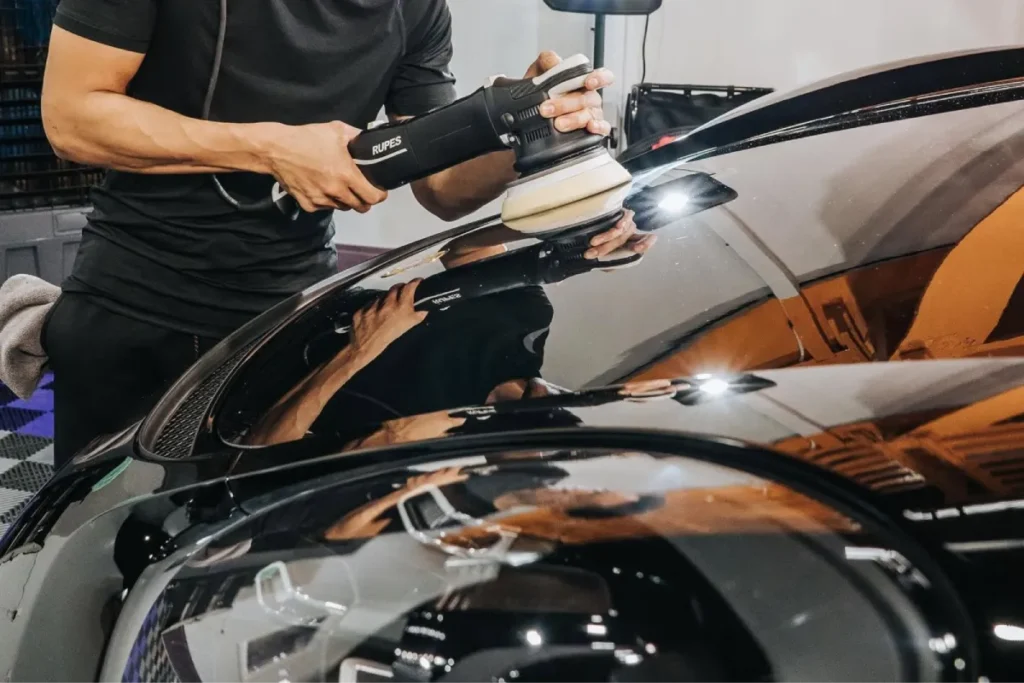
A professional ceramic coating does not make your car paint completely dirt-proof; rather, it creates an ultra-smooth, hydrophobic sacrificial barrier that minimizes dirt adhesion. Environmental dust, fine road grime, and industrial fallout still rest on the coated surface due to static electricity and moisture evaporation. However, the coating prevents these contaminants from bonding chemically to your paint pores, making subsequent washes significantly easier.
Technical Specifications and Key Features of Nano-Coatings
To understand how contaminants interact with a protected vehicle finish, detailers analyze the microscopic physics of nano-coatings. Professional ceramic formulas utilize advanced chemical engineering features to preserve the underlying clear coat:
- Cross-Linked Liquid Polymers: The chemical mechanism by which the liquid coating cures, cross-linking and fusing with the polyurethane molecules of your paint to create a semi-permanent, unified surface layer that cannot simply wash off.
- High Contact Angle Hydrophobicity: A physical surface property where water droplets form a steep sphere (typically greater than 110 degrees). This maximizes the “self-cleaning effect” as rolling beads gather loose dust and carry it away.
- 9H Structural Hardness: The absolute structural hardness scale used to measure scratch, mar, and swirl resistance, providing a durable sacrificial shield against light wash friction and environmental wear.
- Optical Clarifiers: Advanced additives that modify the depth, gloss, and reflective characteristics across factory paint pigments, enhancing color clarity while highlighting the body lines of the vehicle.
The Four Phases of Environmental Grime Accumulation
Even with an exceptional hydrophobic shield, environmental variables will inevitably cause a vehicle to lose its immediate showroom gloss over time. Dirt particles settle on the ceramic barrier through a predictable atmospheric process.
- Atmospheric Sedimentation: Sedimentation Phase.
Fine atmospheric dust, pollen, and airborne grit float through the air and land on horizontal vehicle panels via gravity when the car is parked or idling.
- Static Attraction: Attraction Phase.
As the vehicle moves through air currents, friction generates a passive electrostatic charge across the dry ceramic surface, pulling lightweight dust particles tightly against the panel.
- Moisture Condensation and Evaporation: Evaporation Phase.
Light morning dew, rain showers, or high humidity captures the floating dust. As the sun heats the panel, the water evaporates rapidly, leaving behind consolidated mud spots and mineral rings.
- Oily Traffic Film Encapsulation: Traffic Film Phase.
Exhaust emissions, tire rubber particles, and liquid asphalt mist from damp freeways are kicked up by leading traffic, combining into a sticky, non-water-soluble layer over the coating.
Structural Comparison Matrix: Coated vs. Uncoated Paint Surfaces
While both surfaces will collect road grime over a given driving distance, their structural defense mechanisms and maintenance requirements differ completely.
| Performance Characteristic | Untreated Factory Clear Coat | Professionally Ceramic Coated Paint |
| Surface Topography | Porous, jagged, and chemically open to environmental bonding | Completely leveled, uniform, and closed to molecular penetration |
| Chemical Etching Resistance | Low; acidic contaminants (like bird droppings) rapidly etch down into the paint layers | High: isolates corrosive elements on the surface for safe washing |
| Wash Maintenance Effort | High: requires intensive scrubbing, iron decontamination, and periodic claying | Low; road grime slides away under low-pressure water and lubricated mitts |
| Mineral Spot Lifespan | Permanent: mineral deposits bond to pores and require machine compounding | Temporary; rings rest superficially on the hardcoat and wash away safely |
Debunking the Myth: “Ceramic Coatings Make Your Car 100% Scratch-Proof and Maintenance-Free”
An incredibly prevalent and damaging industry myth is that a professional ceramic coating acts as an indestructible, maintenance-free suit of armor for your car. Many vehicle owners are led to believe that once a vehicle is coated, it can be driven through automatic brushed car washes indefinitely, left unwashed for months, or subjected to heavy environmental abuse without incurring a single scratch or water spot.
In reality, ceramic coatings are highly resilient sacrificial barriers, not bulletproof shielding. They can still be scratched by aggressive automatic brushes, marred by dry wiping, and masked by built-up traffic film. If you neglect a coated car, the layer of accumulated dirt will completely choke out the hydrophobic properties, making the car look and behave exactly like an unprotected vehicle. Regular, gentle maintenance hand-washes are absolutely mandatory to keep the coating functioning at its peak.
Applying Our Advanced Surface Protection Systems to Solve This
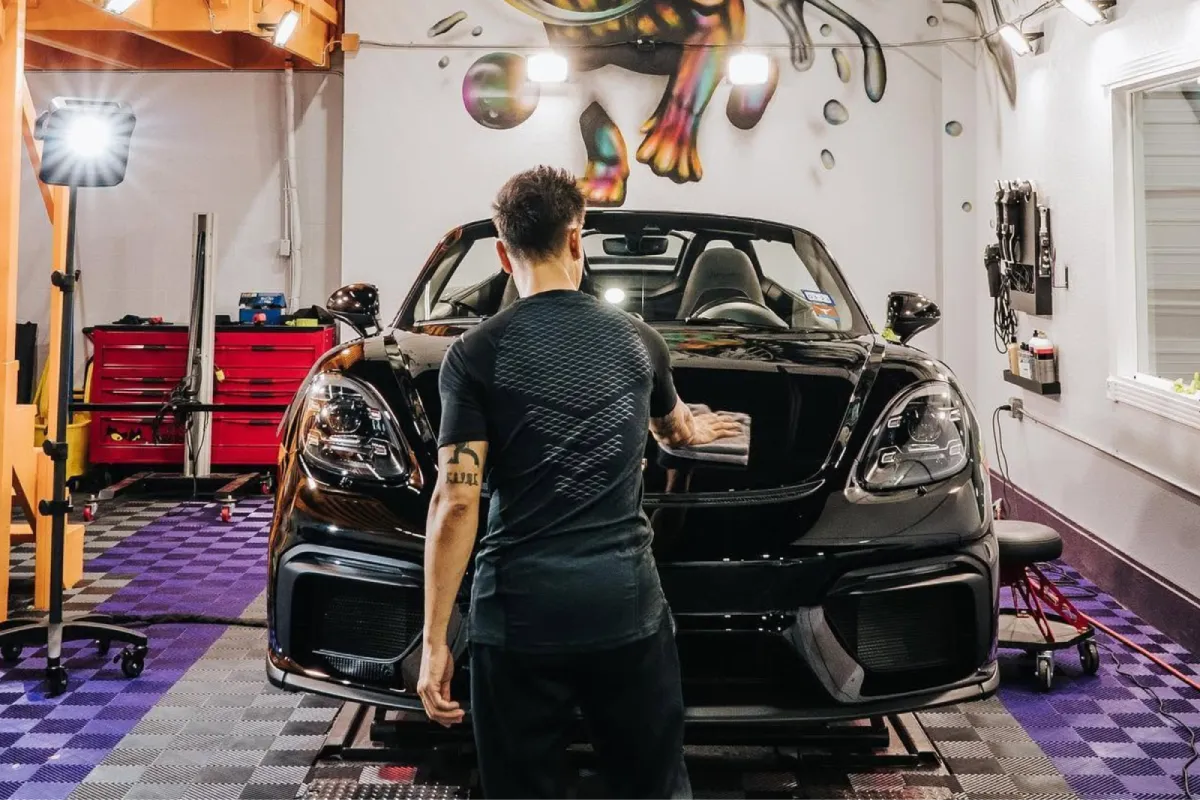
Keeping your vehicle pristine after exposure to harsh road grime requires specialized materials, steady technical training, and an obsession for perfection. At MSD Auto Finish, we treat your vehicle with the same strict discipline and care you would expect in a clean, modern medical clinic. We believe that professional vehicle preservation should deliver consistent quality without compromise, ensuring you feel completely confident, excited, and reassured about the long-term protection of your investment.
We resolve the frustrations of paint maintenance by applying our advanced liquid armor program. Our master team excels at applying our custom protective packages, engineered to absorb rock chips and road debris, maintaining complete clarity that doesn’t affect visibility. Our master technicians provide a trusted defense with a precision fit, utilizing premium materials that are built for longevity, not just looks. Our protective systems significantly reduce repair costs from impact damage, ensuring your glass maintains optical clarity and safety while it enhances long-term windshield durability.
Regional Climate Realities and Local Surface Maintenance
Vehicles operating in the North Texas climate face severe environmental stressors that accelerate the accumulation of road grime. Commuters traveling the fast-moving expressways connecting Prosper, Allen, and Plano understand how aggressively construction dust, clay sediment, and organic tree sap can impact an automobile’s exterior finish. When combined with intense summer heat and sudden humidity spikes, these airborne particles form a tough film that masks the factory’s clear coat.
To properly manage this constant bombardment, performance car enthusiasts and luxury vehicle owners rely on advanced paint correction and surface sealing. Opting for a professional studio for ceramic coating in Frisco, TX provides an immediate shield against these harsh localized elements. Our climate-controlled workshop ensures that before any liquid polymer is applied, the surface undergoes deep chemical and mechanical decontamination to guarantee a flawless covalent bond.
Scheduling a systematic consultation is the most efficient way to keep your car looking pristine despite regional conditions. At MSD Auto Finish, we address the unique pain points of local drivers who want their vehicles protected from micro-scratches and chemical etching. Utilizing an elite application of Frisco, TX, ceramic coating eliminates the microscopic valleys where road oils and minerals like to hide, allowing dust to slide off with minimal effort.
Ultimately, installing a certified Frisco ceramic coating sets a new benchmark for your vehicle’s presentation and value. By ensuring your vehicle transitions through a disciplined installation process, your factory panels remain completely insulated from UV rays and road contaminants, delivering a deep, mirror-like gloss that stands out across Texas.
Preserve Your Showroom Finish with Precision Maintenance
Allowing built-up road film, industrial minerals, and environmental fallout to remain on your coated panels will suppress the advanced hydrophobic performance of your ceramic shield and dull its brilliant depth. At MSD Auto Finish (Ceramic Pro McKinney), we help preserve your ceramic coating through expert maintenance, proper wash techniques, and advanced surface care that keep your vehicle protected, glossy, and performing at its best.
Bring peak hydrophobic action and mirror-like clarity back to every surface of your lifestyle assets. Contact us today. Whether you are looking for paint protection film, elite ceramic installations, window tinting, paint correction, vinyl wraps, or custom accessory customization, reach out to our team to start a conversation and experience craftsmanship executed with absolute precision.
People Also Ask
Why does my ceramic coating look dull or stop beading water after a few months?
If your ceramic coating stops beading water, it is rarely a sign of coating failure. Instead, it is usually a sign of coating “clogging.” A layer of environmental road grime, oil-based traffic film, or hard water minerals has accumulated on top of the coating, masking its hydrophobic properties. A thorough decontamination wash using a dedicated ceramic stripping shampoo will remove this film and instantly restore the beading.
Can I use an automatic tunnel car wash if my car is ceramic coated?
No, you should never take a ceramic-coated car through a standard automatic car wash that utilizes spinning nylon brushes or heavy hanging curtains. These facilities reuse contaminated water and accumulate abrasive grit from previous vehicles, which will scour micro-scratches into your coating, dulling its gloss and shortening its operational lifespan. Stick to touchless washes or proper hand-washing methods.
How often should a ceramic-coated vehicle be washed?
To keep the hydrophobic crystal matrix functioning correctly, a ceramic-coated vehicle should ideally be hand-washed every one to two weeks. Regular washing prevents environmental oils, pollen, and brake dust from forming a thick layer of traffic film that can suppress the coating’s signature self-cleaning properties.
What is coating “clogging,” and how do professionals fix it?
Coating clogging occurs when industrial fallout, embedded iron particles, or environmental contaminants become trapped on top of the ceramic barrier, creating a rough texture and reducing hydrophobicity. Professional detailers fix this by performing a specialized decontamination wash, using dedicated iron removers and mild acidic shampoos to safely dissolve the contamination without harming the underlying coating.